
Significant Judgments
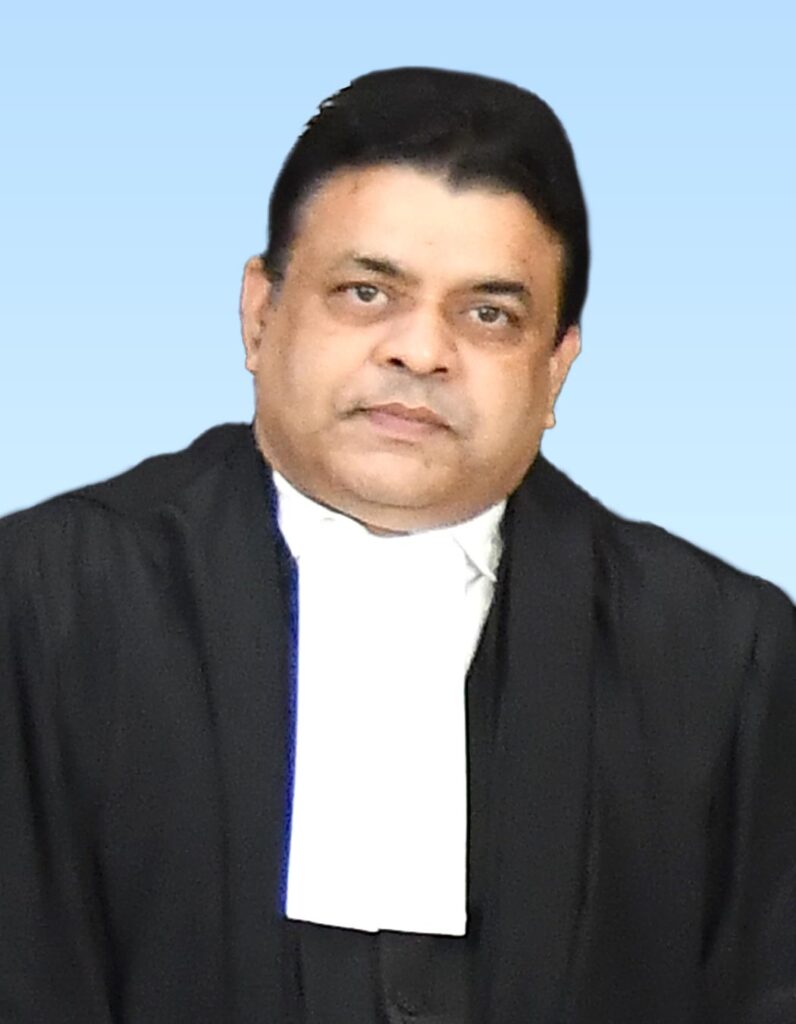
Dr. Justice Sanjeeb Kumar Panigrahi
CASE TITLE : M/S MAHAVIR MEDICINE STORE, RAIRAKHOL V. STATE OF ODISHA &ORS.
CASE NO : W.P.(C) No. 5136 of 2015 and Batch
DATE OF JUDGMENT : April 19, 2024
Administrative Law – Judicial Review – Policy Decisions – Non-renewal of licenses for private On-Campus Medicine Stores vide the Office Order dated 27.02.2015 for establishment of Nirmaya free medicine distribution centers by Government of Odisha-Doctrine of Legitimate Expectation – Applicability limited by overriding public interest – Lease vs. License – Nature of Agreements – The agreements under which the petitioners operated were found to be licenses, not leases, granting temporary occupancy without transferring any property interest – Temporary and revocable – Fundamental Rights – Articles 19(1)(g) and 21 – Reasonable restrictions for securing larger public purpose – Public Interest – Supremacy over private commercial interests – Equitable healthcare access and affordability
The case involves a challenge to the Office Order dated 27.02.2015 issued by the Health and Family Welfare Department of the Government of Odisha, which directed that licenses for private On-Campus Medicine Stores within government healthcare institutions not be renewed. This decision was taken as part of the implementation of the Niramaya Scheme, under which the government established Drug Distribution Counters (DDCs) to provide free medicines to patients at public hospitals. The petitioners, who operated such medicine stores, argued that the non-renewal of their licenses violated their fundamental rights under Articles 19(1)(g) (freedom to practice trade) and 21 (right to livelihood). They contended that the government’s scheme lacked the capacity to address urgent healthcare needs, especially during emergencies, as it failed to stock all required medicines. Additionally, they claimed a legitimate expectation of continuation based on their long-standing operations and previous license renewals. The petitioners also highlighted the economic impact of the policy, asserting that the closure of their stores would lead to unemployment and significant financial losses.
The government defended its decision as a policy measure intended to prioritize public welfare over private interests. It argued that the licenses were temporary, contractual arrangements with no inherent right to renewal. The spaces occupied by the medicine stores were needed for the operation of the Niramaya Scheme, which aimed to provide equitable access to medicines and reduce healthcare costs for the public. The government maintained that its actions were rooted in public interest, emphasizing that the petitioners could continue their trade outside the hospital campuses.
The Orissa High Court analyzed the case by first addressing the scope of judicial review in policy matters. The court reiterated that it could interfere with policy decisions only if they were arbitrary, capricious, or unconstitutional. It highlighted that judicial review should not extend to second-guessing executive decisions grounded in public welfare.
The court also examined the nature of the agreements between the petitioners and the government. Citing decisions like Associated Hotels of India Ltd. v. R.N. Kapoor (1959) and Yazdani International (P) Ltd. v. Auroglobal Comtrade (P) Ltd. (2014), it concluded that the agreements were licenses rather than leases. These licenses granted temporary occupancy rights, contingent upon public need, and did not create any vested or perpetual rights in favor of the petitioners.
The court examined the doctrine of legitimate expectation, which the petitioners relied upon. It acknowledged the principle but noted that in this case, no legitimate expectation arose, as the licenses were explicitly contingent on public interest. The court referred to the Supreme Court dictums in Union of India v. Hindustan Development Corporation (1993), Madras City Wine Merchants Association v. State of Tamil Nadu (1994), and Monnet Ispat & Energy Ltd. v. Union of India (2012), emphasizing that this doctrine applies only when there is an express promise, established practice, or legal sanction creating a justifiable expectation. Even if the petitioners had formed an expectation based on past renewals, such an expectation was overridden by the larger public welfare objective of the Niramaya Scheme.
The court found the government’s decision reasonable and necessary to achieve the objectives of the Niramaya Scheme. It noted that the scheme sought to address healthcare disparities by reducing out-of-pocket expenses and ensuring access to essential medicines for economically weaker sections could not be derailed to safeguard private commercial interests. The decision to terminate the petitioners’ licenses was deemed neither arbitrary nor discriminatory but a sound measure in public interest.
This judgment has a significant impact on the socio-economic and legal framework surrounding public healthcare in India. It underscores the principle that public interest can override private commercial rights when state policies are aimed at improving social welfare. The court’s ruling supports the government’s prerogative to implement equitable healthcare measures without fear of excessive judicial interference, provided such policies are reasonable and transparent. Socio-economically, the decision strengthens efforts to reduce healthcare inequities and expand access to affordable medicines, particularly for marginalized communities.
CASE TITLE : SUPRIYA JENA V. STATE OF ODISHA AND OTHERS
CASE NO : W.P.(C) No. 30616 of 2020
DATE OF JUDGMENT : June 25, 2024
Service Law – Maternity Leave – Grant of maternity leave to a government employee for a child born through surrogacy – Petitioner, a government servant, attained motherhood through surrogacy and was initially granted maternity leave for 180 days, followed by earned leave – Finance Department later questioned the validity of the leave, citing the absence of specific provisions for surrogacy under Rule 194 of the Odisha Service Code – held that the term “maternity” must be interpreted to include all forms of motherhood, including surrogacy, to align with advancements in medical science and societal norms – Denial of maternity leave for surrogacy-born children violates Articles 14, 16, and 21 of the Constitution, as it discriminates against commissioning mothers and undermines the welfare of the child – Directed the State to sanction maternity leave for the petitioner and update relevant rules to ensure equal treatment for surrogacy, natural birth, and adoption – Odisha Service Code, Rule 194; Assisted Reproductive Technology (Regulation) Act, 2021; Constitution of India, Articles 14, 16, 21.
In this case, the petitioner, a female government employee, sought judicial intervention against the denial of maternity leave benefits for a child born through surrogacy. The petitioner, a member of the Orissa Finance Service, entered into a gestational surrogacy agreement and became the mother of a child born on 25.10.2018. She initially applied for and was granted maternity leave for 180 days, which was followed by earned leave. However, the Finance Department later questioned the validity of the leave on the grounds that the Odisha Service Code did not explicitly provide for maternity leave in cases of surrogacy. Citing the lack of specific provisions for surrogacy-related maternity leave, the department declined to formalize her leave request and referred the matter for further examination. Consequently, the petitioner sought legal recourse, arguing that the denial of maternity leave was discriminatory and violative of her constitutional rights under Articles 14 and 16.
The petitioner contended that the term “maternity” under Rule 194 of the Odisha Service Code must include all forms of motherhood, including surrogacy. She emphasized that surrogacy, like natural conception and adoption, entails significant caregiving responsibilities, particularly during the early stages of a child’s development. Denying maternity leave to commissioning mothers, she argued, was arbitrary, discriminatory, and contrary to the principles of gender justice. Furthermore, she asserted that the right to maternity leave was rooted in Article 21, encompassing the right to life and motherhood, and the denial of such benefits undermined the well-being of both mother and child.
The respondents, represented by the State, submitted that the existing rules and office memoranda provided maternity leave for natural and adoptive mothers but were silent on surrogacy. They maintained that the absence of explicit provisions precluded the petitioner from claiming such leave. However, they acknowledged that the matter was under consideration by the relevant departments for future inclusion in the rules.
The court analyzed the issue in light of constitutional principles, judicial precedents, and the evolving understanding of motherhood. The court observed that maternity leave provisions are beneficial in nature and must be interpreted in a progressive manner, considering advancements in medical science and societal changes. The court underscored that surrogacy, as a recognized means of attaining motherhood, entitles commissioning mothers to the same benefits as biological or adoptive mothers. The court emphasized that the term “maternity” encompasses the caregiving responsibilities and emotional bonding that follow childbirth, irrespective of how the child is conceived.
The court relied on the Supreme Court’s decision in B. Shah v. Presiding Officer, Labour Court, Coimbatore, which advocated a liberal interpretation of maternity benefit laws to uphold social justice. It also referenced the Assisted Reproductive Technology (Regulation) Act, 2021, which recognizes the rights of commissioning mothers in surrogacy arrangements. The court held that denying maternity leave to commissioning mothers violated Articles 14, 16, and 21 of the Constitution. Furthermore, it highlighted the importance of supporting women’s workforce participation through inclusive maternity benefits.
The judgment marks a progressive step toward recognizing the evolving concept of parenthood in Indian society. By extending maternity benefits to commissioning mothers, it addresses a significant gap in law and acknowledges the transformative role of medical advancements such as surrogacy. This decision promotes inclusivity, ensuring that all mothers, irrespective of the means by which they attain motherhood, are treated equitably. It sets a strong precedent for eliminating discrimination against commissioning mothers, thereby fostering greater acceptance of alternative reproductive methods in a culturally diverse society. The ruling also emphasizes the critical early bonding period between a mother and child, highlighting the shared responsibility of employers and the state in nurturing familial ties. By advocating policy reforms, the judgment encourages workplaces to be more supportive of women, facilitating their sustained participation in the workforce while balancing their familial roles.