
Significant Judgments
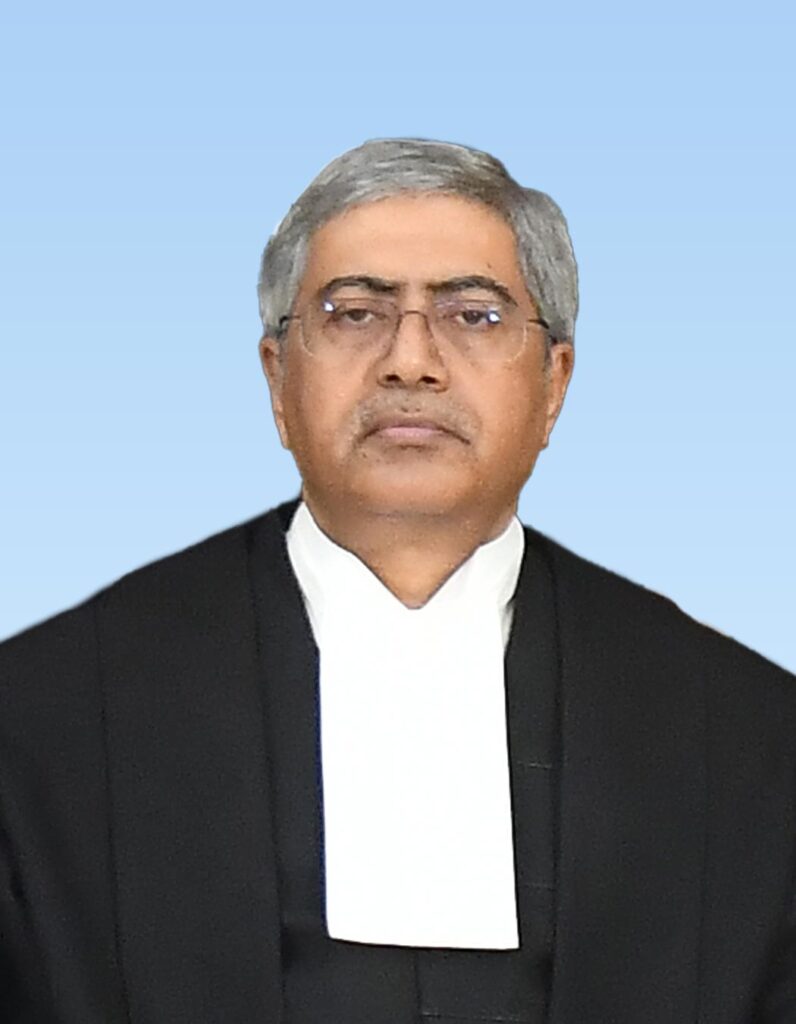
Justice Arindam Sinha
CASE TITLE : HEMANTA SHARMA & OTHERS V. THE REGISTRAR OF COMPANIES,
ORISSA, CUTTACK ET AL
CASE NUMBER : COA Nos. 1, 2, 3, 4, 5 and 6 of 2023
DATE OF JUDGMENT : January 30, 2024
CORAM : Justice Arindam Sinha, Justice M.S. Sahoo
Corporate Law – Appointment of Woman Directors – Compliance and Vicarious Liability – Appellants, non-executive directors of electricity distribution companies, were prosecuted under Section 172 of the Companies Act, 2013, for failure to appoint woman directors as required by Section 149(1)(b) read with Rule 3(ii) of the Companies (Appointment and Qualification of Directors) Rules, 2014 – High Court held that the companies had been taken over by GRIDCO, a government company, prior to the compliance deadline of 31.03.2015 under an OERC order dated 04.03.2015, and further protected by a government notification dated 05.06.2015 exempting government companies from certain provisions of the Act – The court found no specific acts of omission attributable to the appellants as non-executive directors, negating vicarious liability – Convictions and penalties were quashed, and the appeals allowed – Companies Act, 2013, Sections 149(1)(b), 149(2), 172, 437; Government Notification dated 5-6-2015; OERC Order dated 4-3-2015.
The appeals arose from judgments passed by the Additional Chief Judicial Magistrate (Special Court)-cum-Assistant Sessions Judge, convicting the appellants under Section 172 of the Companies Act, 2013, for non-compliance with Section 149(1)(b) and Rule 3(ii) of the Companies (Appointment and Qualifications of Directors) Rules, 2014. The appellants, who were non-executive directors of three electricity distribution companies (NESCO, WESCO, and SOUTHCO), were prosecuted for failing to appoint at least one woman director by the prescribed deadline of 31st March 2015. The prosecution was initiated by the Registrar of Companies (RoC) following show-cause notices issued in June 2015. The appellants contended that the companies were government-controlled by GRIDCO, a government company, as of 04.03.2015, based on an order by the Odisha Electricity Regulatory Commission (OERC). They argued that the prosecution lacked legal foundation due to the companies’ transition into government entities and the lack of specific acts of liability attributed to them.
The appellants argued that the companies had been placed under GRIDCO’s management as per the OERC order dated 04.03.2015. They emphasized that this order, coupled with a notification dated 05.06.2015, excluded the applicability of certain provisions of the Companies Act to government companies. Citing Sunil Bharti Mittal v. CBI (2015), they stressed that there must be a specific act attributed to directors to impose criminal liability, which was absent in their case. They further submitted that the compliance period under Section 149(2) allowed until 31.03.2015 had not expired when the companies transitioned to GRIDCO’s control.
The RoC, through government counsel, countered that the companies retained private ownership and failed to demonstrate timely compliance with the statutory provisions. They argued that the management’s composition remained unchanged until the compliance deadline, thus rendering the non-compliance prosecutable. They also claimed that the prosecution and penalties were justified as per the Companies Act, 2013.
The High Court analyzed the Companies Act, 2013, and the interplay with the OERC order and subsequent notification exempting government companies from certain obligations. The court observed that the companies came under GRIDCO’s management and control by 04.03.2015, prior to the compliance deadline of 31.03.2015. The prosecution, based on alleged non-compliance by 31.03.2015, was deemed unfounded since the companies had effectively transitioned into government entities by then, making them subject to different compliance obligations.
The court referred to Sunil Bharti Mittal v. CBI, emphasizing that criminal liability under corporate law requires specific acts attributable to individual directors. The appellants, as non-executive directors, had no role in the day-to-day management or statutory compliance of the companies. The court also noted the absence of mens rea or evidence of direct involvement in the alleged non-compliance. Given the transition of management to GRIDCO, the companies’ actions during the compliance period could not be solely attributed to the appellants. The court further underscored the statutory provision under Section 149(2), granting a one-year period from the effective date of the Companies Act, 2013, to ensure compliance with the rule for appointing a woman director. This deadline aligned with the companies’ integration into GRIDCO, absolving the appellants of liability for the alleged infraction.
The High Court held that the prosecution and penalties imposed were legally unsustainable. It found that the prosecution failed to establish specific acts of non-compliance attributable to the appellants, who were non-executive directors with no operational control. The court reversed the convictions, set aside the penalties, and allowed the appeals.
Case Title: M/s. Orissa Stevedores Ltd. V. Designated Committee, Central GST and Customs, Bhubaneswar and others
Case No: W.P.(C) No. 26408 of 2020
Date of Judgment: 11.11.2024
CORAM: Justice Arindam Sinha, Justice M.S. Sahoo
Taxation Law – Legacy Dispute Resolution – Input Tax Credit Adjustment – Sabka Vishwas (Legacy Dispute Resolution) Scheme, 2019 – Petitioner sought issuance of discharge certificate (SVLDRS-4) under the scheme for settling disputed demand of ₹5,19,28,080 related to wrongly availed ITC during financial years 2010-11 to 2013-14 – Petitioner claimed adjustment of entire disputed amount through ITC, as permitted under circular dated 27.08.2019 – Revenue denied issuance of discharge certificate, arguing that no deposit was made as required under the scheme – High Court held petitioner eligible for the scheme and confirmed applicability of ITC adjustment for tax disputes under the circular – Revenue circulars held binding, and petitioner’s demonstrated ITC adjustment satisfied the scheme’s requirements – Directed issuance of SVLDRS-4 within four weeks – Finance (No. 2) Act, 2019, Chapter V, Sections 124(2) and 125(1).
The case involved M/s Orissa Stevedores Ltd., which filed a writ petition seeking a mandamus directing the revenue authorities to issue a discharge certificate (SVLDRS-4) under the Sabka Vishwas (Legacy Dispute Resolution) Scheme, 2019. The dispute originated from a show cause notice dated 15.10.2015, demanding ₹5,19,28,080 as wrongly availed Input Tax Credit (“ITC”) during the financial years 2010-11 to 2013-14. Before the adjudication of the notice, the petitioner applied for settlement under the scheme by submitting Form SVLDRS-1. In its application, the petitioner claimed to have paid the entire disputed amount through adjustment of the disputed ITC. However, the revenue authorities contended that no actual deposit was made, and the petitioner did not qualify for a discharge certificate. An adjudication order was subsequently passed, confirming the demand along with interest and penalty.
The petitioner argued that its application under the Sabka Vishwas scheme was valid and complied with the provisions of the Finance Act, 2019. It claimed that the disputed ITC was already paid by adjustment, as permitted under Section 124(2) of the Act and Circular dated 27.08.2019. The petitioner emphasized that the scheme allowed adjustment of ITC towards tax liability in cases of dispute. The petitioner contended that revenue’s refusal to acknowledge the ITC adjustment contradicted the scheme’s provisions and purpose, which aimed at resolving legacy disputes and providing amnesty.
The revenue authorities submitted that the petitioner wrongly availed ITC and did not deposit any amount under the scheme as required. Revenue pointed out that Forms SVLDRS-2 and SVLDRS-3, issued to the petitioner, clarified the obligation to pay 50% of the disputed tax amount to qualify for relief under the “Litigation” category. Revenue maintained that the petitioner failed to meet this requirement and was therefore ineligible for a discharge certificate. It argued that the petitioner’s reliance on adjustment of ITC was misplaced as the disputed ITC could not be treated as valid payment under the scheme.
The Court analyzed the provisions of the Sabka Vishwas Scheme, 2019, particularly Sections 124 and 125 of the Finance Act, 2019, and the associated circular dated 27.08.2019. The court noted that the scheme was intended to liquidate legacy tax disputes and provided for two components: dispute resolution and amnesty. The petitioner’s eligibility to apply under the scheme was not disputed, and the issue hinged on whether the petitioner had fulfilled the payment requirements through adjustment of ITC.
The court emphasized Clause (c) of the revenue’s circular, which explicitly stated that tax already paid through input credit in disputed cases must be adjusted by the Designated Committee at the time of determining the final payable amount. The court observed that the petitioner had demonstrated that the exact amount demanded in the notice had been claimed as paid through ITC adjustment. Revenue’s argument that no deposit had been made overlooked the scheme’s provision allowing ITC adjustment for disputed tax amounts. The court further held that the adjudication order issued after the petitioner’s application under the scheme could not nullify its entitlement to settlement benefits.
Relying on Merino Panel Product Limited, the court reaffirmed that revenue circulars are binding and must be followed in implementing statutory schemes. The court concluded that the revenue’s refusal to adjust the ITC and issue a discharge certificate violated the scheme’s provisions and principles of fairness.
This judgment clarifies the scope of ITC adjustment under the scheme and sets a precedent for the interpretation of similar provisions in future cases. The judgment aligns with the broader objective of reducing litigation and facilitating settlement of legacy disputes in the indirect tax regime.