
Significant Judgments
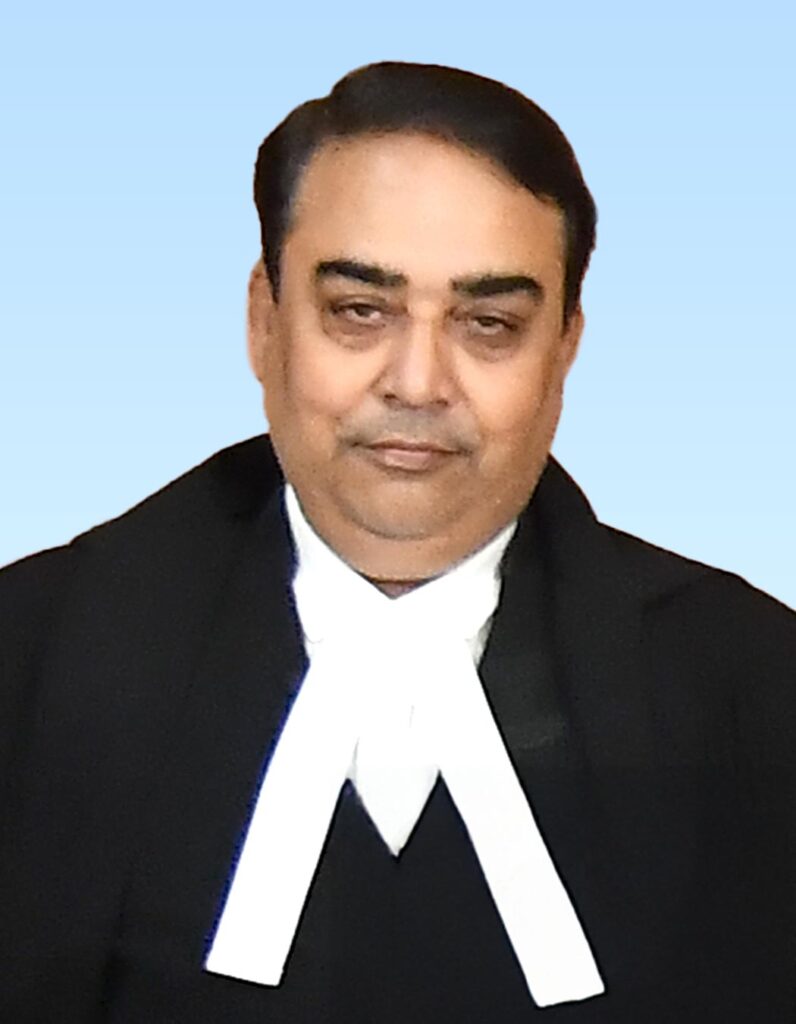
Justice Gourishankar Satapathy
CASE TITLE : PRATAP KUMAR JENA @ PRATAP JENA V. STATE OF ORISSA AND ANOTHER
CASE NO : CRLREV No.587 of 2023
DATE OF JUDGMENT : October 01, 2024
Criminal Law – Cognizance – Second Protest Petition – Filing of, after commitment of the case to Sessions Court – FIR lodged on 03.01.2021 for the murder of two individuals – Petitioner, an MLA, named but excluded from the charge sheet – Informant filed two protest petitions – Magistrate took cognizance twice – Petitioner challenged Magistrate’s jurisdiction to take second cognizance post-commitment to Sessions Court– Magistrate’s Power – Jurisdiction after case commitment – Held, Magistrate cannot entertain second protest petition or take cognizance for the second time without order of first cognizance being set aside or varied – Only Sessions Court empowered to add persons as accused under Section 319 CrPC based on evidence or materials emerging during trial – Investigation – Further Investigation – Direction for further investigation by Magistrate after taking cognizance – Legal propriety – Held, further investigation permissible under Section 173(8) CrPC even after taking cognizance, provided specific reasons are recorded – Criminal Procedure Code, 1973 – Ss. 173(8), 190, 202, 209, 319.
The case stems from a brutal incident on 02.01.2021, where two individuals, Kulamani Baral and Dibyasingh Baral, were fatally attacked with lethal weapons in Mahanga, Odisha. The attack allegedly occurred due to a conspiracy involving multiple individuals. The petitioner, Pratap Kumar Jena, was named in the FIR filed by the son of one of the deceased, alleging that the petitioner had threatened the deceased days before the attack. However, the police investigation did not find sufficient evidence against the petitioner, excluding him from the charge sheet filed against 13 accused.
Dissatisfied with the exclusion, the complainant filed a protest petition in August 2021. The Magistrate directed further investigation, but the final report again found no evidence implicating the petitioner. Subsequently, a second protest petition was filed in January 2023 by the deceased’s brother. After examining the complainant and witnesses, the Magistrate took cognizance of the offenses against the petitioner and issued summons.
The counsel for the petitioner contended that the Magistrate’s powers are substantially curtailed post-committal and argued that, upon committing a case to the Sessions Court, the Magistrate becomes functus officio and is consequently barred from taking cognizance of the same offense again. It was further argued that the second protest petition and the subsequent cognizance lacked jurisdiction and violated established legal principles.
Conversely, the complainant’s counsel argued that filing a second protest petition is permissible under the law, particularly when the initial investigation is tainted by bias or is demonstrably inadequate. It was submitted that a Magistrate retains the authority to summon additional accused persons even post-committal, as supported by judicial precedents such as H.S. Bains v. State (Union Territory of Chandigarh). Furthermore, the complainant pointed to prima facie evidence of the petitioner’s complicity, particularly threats allegedly made to the deceased.
The Court distilled the case into two pivotal legal questions. First, it considered whether a Magistrate can take cognizance of an offense for a second time based on a protest petition. The Court held that such an action is impermissible, as it violates the principle that cognizance of an offense can be taken only once, unless the original order is set aside by a higher court. Referring to the judgments in Dharam Pal v. State of Haryana and Krishna Lal Chawla v. State of Uttar Pradesh, the Court underscored that permitting multiple cognizances would lead to procedural irregularities and undermine the integrity of criminal proceedings. Second, the Court examined whether a Magistrate retains jurisdiction after committing the case to the Sessions Court. It clarified that once a case is committed, the Magistrate’s role becomes predominantly administrative, and the authority to summon or add new accused persons lies exclusively with the Sessions Court under Section 319 of the CrPC. The Court, citing Jile Singh v. State of Uttar Pradesh, emphasized the statutory limitations on the Magistrate’s jurisdiction post-committal.
While the Court acknowledged the complainant’s right to contest investigative deficiencies, it found no substantial new evidence to justify the filing of a second protest petition. The allegations regarding threats made by the petitioner had already been examined during earlier investigations and were dismissed for lack of corroborative evidence.
This judgment reaffirms key procedural principles in criminal law, ensuring a delicate balance between protecting the rights of the accused and safeguarding the complainant’s access to justice. By delineating the respective powers of Magistrates and Sessions Courts, the ruling prevents judicial overreach and safeguards the integrity of the trial process. Moreover, the judgment discourages repetitive litigation based on the same set of facts, promoting judicial efficiency and shielding individuals from harassment through frivolous criminal proceedings.
CASE TITLE : BHARAT KUMAR JANI AND ANOTHER V. STATE OF ODISHA AND OTHERS;
STATE OF ODISHA V. RAJESWAR BISOYI AND OTHERS
CASE NO : W.P.(C) Nos.8290 and 15877 of 2016
DATE OF JUDGMENT : March 14, 2024
CORAM : Dr. Justice B.R. Sarangi, Justice G. Satapathy
Service Law – Recruitment – Retrospective Amendments – Reservation Ceiling – Procedural Fairness – Recruitment for Assistant Executive Engineer posts under various departments – Corrigenda issued by OPSC extending age relaxation for in-service candidates, introducing reservations for sports persons – Tribunal quashed corrigenda as being retrospective and beyond the permissible reservation ceiling of 50% – High Court upheld corrigenda, holding they were issued before the extended application deadline and aligned with the Odisha Engineering Service Rules, 2015 – Held, procedural amendments benefitting candidates may have retrospective effect if consistent with fairness and no prejudice is caused – Affirmed 50% reservation ceiling as constitutionally mandated, upheld Tribunal’s directions – Directed appointments to proceed based on revised merit list without quashing the recruitment process entirely.
The aforementioned writ petitions were filed to challenge the common order dated 22.03.2016, passed by the Orissa Administrative Tribunal, Cuttack Bench, which dealt with the recruitment process initiated by the Odisha Public Service Commission (OPSC) for the posts of Assistant Executive Engineers in Civil and Mechanical branches under various departments of the State of Odisha. The OPSC issued Advertisement No. 03 of 2015-16 for the post of Assistant Executive Engineers in the Civil and Mechanical branches under various departments. The original advertisement was amended by two corrigenda issued on 29.05.2015 to extend the upper age limit for in-service candidates, allow reservations for sports persons, and update other conditions. The Tribunal struck down the corrigenda, holding that their issuance after the initial application deadline violated the principles of fairness and reservation limits.
The petitioners, including in-service engineers and the State of Odisha, contended that the corrigenda were essential for fair consideration of in-service candidates, particularly those adversely affected by the original age restrictions. They sought to uphold the corrigenda to ensure equitable recruitment, while respondents opposed them as retroactively benefiting certain candidates and violating the 50% reservation ceiling. It was argued that the corrigenda were issued before the extended deadline for applications, thereby complying with procedural fairness. They emphasized that the corrigenda aligned with the Odisha Engineering Service (Methods of Recruitment and Conditions of Service) Amendment Rules, 2015, which permitted age relaxation for in-service candidates and introduced other revisions.
The respondents opposed the corrigenda relying on the Supreme Court in Y.V. Rangaiah V. J. Sreenivasa Rao and A.A. Calton v. Director of Education, asserting that vacancies must be filled under the rules applicable at the time they arose. They argued that the corrigenda unjustly favored in-service candidates at the expense of others and exceeded the permissible reservation limit of 50%. Additionally, they highlighted alleged procedural irregularities and discrepancies in the examination process, such as inclusion of out-of-syllabus questions and alleged use of electronic devices for malpractice.
This Court examined the Tribunal’s decision and disagreed with it noted that the corrigenda did not materially alter the eligibility conditions but sought to provide relief to in-service candidates through age relaxation and procedural adjustments. The Court drew extensively from Raj Kumar v. State of Himachal Pradesh, which clarified that amendments to rules can apply prospectively or retrospectively, depending on the legislative intent and the principle of fairness.
The Court found that the issuance of corrigenda before the extended application deadline did not prejudice other candidates, as sufficient time was provided to avail the benefits of the amendments. It also held that the principle of fairness justified retrospective application of procedural rules aimed at benefitting candidates, particularly when no vested rights were infringed. The Court distinguished between substantive rights, which require strict adherence to existing rules, and procedural adjustments, which can be made to address anomalies or omissions.
Regarding the reservation ceiling, the Court upheld the Tribunal’s observation that reservations must not exceed 50%, consistent with constitutional mandates. It also endorsed the Tribunal’s directions for excluding faulty or out-of-syllabus questions from evaluation and awarding pro-rata marks to ensure fairness. However, it disagreed with the Tribunal’s decision to quash the corrigenda, holding that they were consistent with legislative intent and procedural fairness.
This judgment highlights the judiciary’s role in balancing procedural fairness with legislative intent in recruitment processes. It underscores that procedural amendments aimed at expanding eligibility or rectifying anomalies should not be invalidated if they cause no prejudice to existing candidates. This ruling serves as a critical precedent for resolving conflicts between procedural amendments and fairness in recruitment, advancing administrative efficiency while safeguarding constitutional principles.