
Significant Judgments
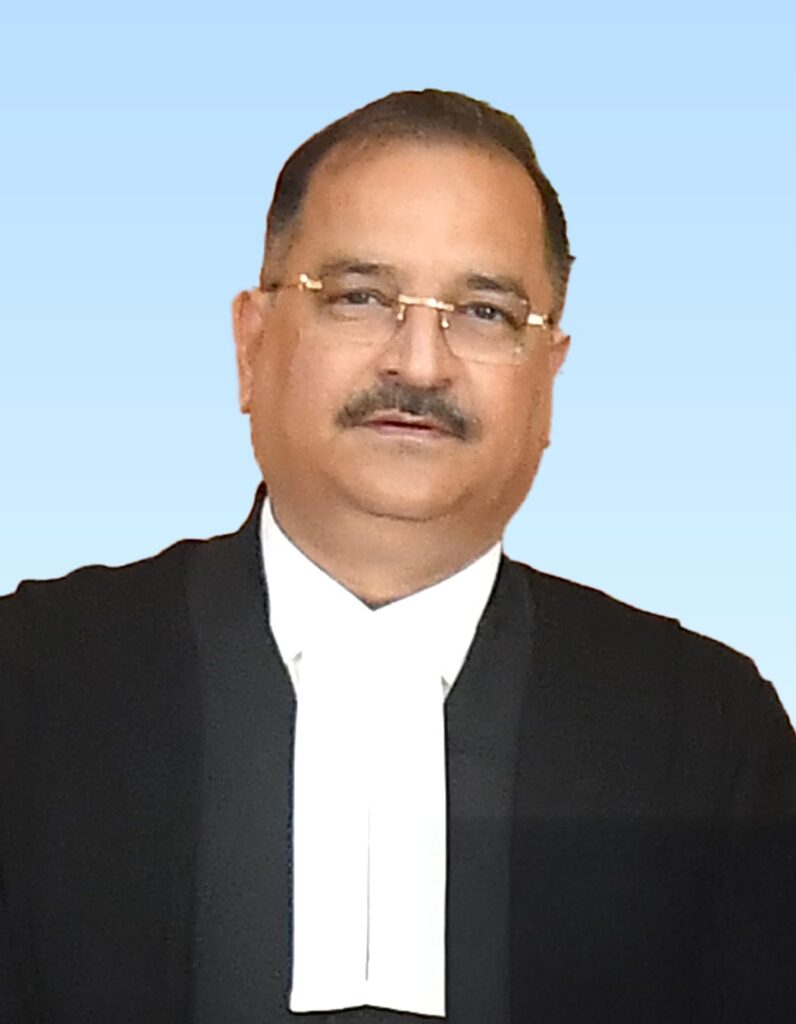
Justice Aditya Kumar Mohapatra
CASE TITLE : AMARESH BEHERA & ORS. VS. STATE OF ODISHA & ORS.
CASE NO : W.P.(C) NO.35563 of 2020
DATE OF JUDGMENT : April 26, 2024
ODISHA PHARMACIST SERVICE (METHODS OF RECRUITMENT AND CONDITIONS OF SERVICE) RULES, 2019 – Rule 4 is the deeming provision – Held, the Petitioners are qualified under the applicable provisions and a valuable right had accrued in their favour – Writ is allowed and Opposite Parties are directed to regularize the service of the Petitioners as a one-time measure.
The Petitioners, Pharmacists under the Opposite Party No.4, have challenged the action of the Opposite Parties in not regularizing/absorbing their services and consequently not inducting them in the cadre of Pharmacist under the Odisha Pharmacist Service (Methods of Recruitment and Conditions of Service) Rules, 2019 (“2019 Rules”). It is the Petitioner’s Case that the Opposite Parties unjustly denied the Petitioners regularization on the ground that they are working in Mobile Health Unit (MHU) hence, their services are not covered under the 2019 Rules. The Petitioners have made specific prayer for quashing of the clarificatory letter dated 20.03.2019 by the Opposite Party No.1 (Annexure-9) and letter dated 23.03.2019 by the Opposite Party No.3 (Annexure-10), along with a further prayer to direct the Opposite Parties to include the Petitioners’ names in the gradation list, regularize their services and extend all service and financial benefits to the Petitioners.
The central issue in the present matter revolves around the 2019 Rules, specifically Rules 4 and 5 therein. The issue arose when the advertisement dated 11.08.2011 was issued pursuant to Resolution dated 29.10.2008. The Resolution provides that on completion of six (6) years of uninterrupted contractual service, the Pharmacists engaged on a contractual basis, including the Pharmacists who are working under MHUs, will be eligible for appointment as regular Pharmacists. Later, following the 11.08.2011 advertisement, the present Petitioners participated in the recruitment process and were eventually appointed as Pharmacists in M.H.Us under N.R.H.M. in Mayurbhanj District. Furthermore, Clause-9 of Resolution dated 13.05.2013, issued by the Health & Family Welfare Department, Government of Odisha, specifically provides that the past services of contractual Pharmacists working under various project/schemes like M.H.U. etc. shall also be counted for computation of six years of service at the time of regularization. Additionally, The C.D.M.O., Mayurbhanj, vide his letter dated 19.08.2014, has categorically stated that the present Pharmacists have been appointed by following a due recruitment procedure and the O.R.V. Act and Rules.
It is after the aforesaid development that the 2019 Rules were framed by the State Government. The Hon’ble Court, after analyzing the specific Rules 4, 5, 6, 7 & 10 of the aforesaid rules, has concluded that the Petitioners are qualified as per the Rules and as such, they fall under the deeming provision enshrined in Rule 4. Therefore, the services of the Petitioners ought to have been treated as regularized w.e.f. the date on which the rule came into force, i.e. on 13.03.2019. The Hon’ble court has also referred to the cases of similarly situated candidates who had approached the Odisha Administrative Tribunal, Bhubaneswar by filing O.A. No.744 of 2017. The said ruling was in favour of the candidates and attained finality vide the Hon’ble Supreme Court’s order dated 12.01.2021 in SLP (C) No(s). 13077 of 2020 (which was filed by the state authorities). So far as the amended Rules of the year 2020 (which amended the 2019 Rules) are concerned, they do not apply to the present case since the present batch of writ applications were filed prior to the date on which the amended rules came into force. Therefore, the case of the present Petitioners has been held to be governed by the 2019 Rules. As to the judgements relied by the Opposite Parties, the Hon’ble Court has opined that the said judgements do not apply to the facts of the present case since they pertain to cases where there was no governing rule or executive instruction, as opposed to the case at hand where the Petitioners are clearly governed under Government Resolutions under Annexures 3 & 4 and the 2019 Rules.
Ultimately, the Hon’ble court has held that a valuable right had accrued in favour of the Petitioners for their absorption against regular vacant posts of Pharmacists, initially under the Resolutions under Annexure-3 and 4 and under the 2019 Rules, particularly Rule-4(1) of the aforesaid rules. Therefore, the Writ application was allowed with a direction to the Opposite Parties to regularize the service of the Petitioners as an one-time measure. As under Rule-4(1) of the 2019 Rules.
CASE TITLE : B.AJAYA PATRO VS. STATE OF ODISHA & ORS.
CASE NO : W.P.(C) NO.40936 of 2023
DATE OF JUDGMENT : March 01, 2024
THE ODISHA GRANT OF WEIGHTAGE IN MARKS IN THE RECRUITMENT FOR SHORT-TERM COVID-19 HEALTHCARE WORKERS RULES, 2022 – Rule 2(C) – Purposive Interpretation supplied – Held, unreasonable classification made between the two groups of health workers – Writ Petition allowed and Opposite Parties directed to grant weightage mark to Petitioners.
The present Petitioners are candidates who had applied pursuant to an advertisement for appointment as Group-C Nursing Officers in the district cadre. The present petitioners, who are qualified Nursing staff possessing relevant educational certificates from recognized institutions, were engaged as Short-term Covid-19 Health Workers during the Covid-19 Pandemic. The principal resentment of the present Petitioners is that having performed their duties for a minimum period of 3 months, the present Petitioners satisfy the eligibility criteria for being awarded an extra 5% weightage mark, on the total marks secured, in the recruitment examination. However, they have not been awarded such 5% weightage marks. Aggrieved, the Petitioners seek to quash the rejection-list dated 08.08.2023 and for a direction to the Opposite Parties to consider their case for the grant of the 5% weightage mark.
It is the Petitioners’ case that they have worked as Short-term Covid-19 Health Workers for more than three months in different healthcare institutions in the State. Since the covid-19 healthcare operation was being conducted under the direct supervision of the local Government, all the private and government hospitals followed a common protocol for treating Covid-19 patients. Since the Odisha grant of weightage in marks in the Recruitment for Short-Term COVID-19 Healthcare workers Rules, 2022 i.e. Rules, 2022 (providing a 5% weightage mark) were intended to reward the valuable service rendered by the short-term Covid-19 healthcare workers (including the present petitioners), the Petitioners claim that they are entitled to such 5% weightage marks. Moreover, the Government cannot discriminate amongst the applicants and create a sub-class by denoting one group as health workers in the Government hospitals and the other as health workers in private hospitals (i.e. the present Petitioners). Such a distinction is unreasonable and violative of Articles 14 and 16 of the Constitution of India.
The backbone of the Opposite Party’s contention is that the definition of “short term Covid-19 health workers” under Rule 2(C) of the Rules, 2022 does not include the present Petitioners, therefore, they do not merit the benefit of 5% weightage, as provided under Rule 3. The Petitioners, on the other hand, claim that the definition in Rule 2(C) has been given a restrictive interpretation and such sub-classification within a broader class is unreasonable since it has no nexus with the object sought to be achieved through the Rules, 2022.
While finally adjudicating the matter, The Hon’ble court has first observed that the Rules in question were enacted in exercise of the power under the proviso to Article-309 of the Constitution of India. Therefore, they must adhere to the constitutional guarantee in the shape of Articles 14, 16, 19 and 21, in order to prevail. It has also been held that there is no difference between Health Workers engaged by H&FW Dept and those engaged in private hospitals (i.e. the present Petitioners). Additionally, the State authorities have given the concerned Rule a restrictive interpretation. In so doing, the present Petitioners, who risked their lives to render valuable service during the Covid-19 pandemic, have been discriminated against. As such, there is no valid ground/justification for creation of such a sub-class amongst the short-term Covid-19 healthcare workers.
Finally, after taking into account a catena of judgements of the Hon’ble Apex Court, viz-a-viz A.K. Krishna Vs. State of Karnataka (AIR 1998 SC 1050), Distt. Registrar v. M.B. Koyakutty (AIR 1979 SC 1060), S.L. Sachdev v. Union of India (AIR 1981 SC 411), Ajay Hasia Vs. Khalid Mujib Sehravardi (AIR 1981 SC 487), E.P. Royappa Vs. State of T.N. (AIR 1974 SC 555), Maneka Gandhi Vs. Union of India (AIR 1978 SC 597), Sharma Transport Vs. Govt. of A.P. [(2002) 2 SCC 188] etc., the Hon’ble Court has concluded that Rule-2(C) of the Rules, 2022 is not in compliance with Articles 14 and 16 of the Constitution of India. However, the rule has not been struck down altogether, instead, the golden rule of interpretation has been applied. Ultimately, the Hon’ble Court has held that by removing the words “by health and family welfare department” and reading down Rule-2(C), it can be made compliant of Articles 14 and 16 of the Constitution of India. Accordingly, the batch of Writ Petition has been allowed with a direction to the Opposite Parties to end the disparity between the two classes of Healthcare Workers, and grant the 5% weightage of mark, as per Rule-3, to the deserving Petitioners.